-


- A Stratified Analysis of Efficacy and Safety of Fenfluramine in Patients with Dravet Syndrome
-
 M. Scott PerryHead of Neurosciences, Justin Institute for Mind HCook Children's Health Care SystemGeneric 'disconnected' Message
Poster Number: 1.401
Rationale: Dravet syndrome (DS) is a rare, drug-resistant, developmental and epileptic encephalopathy characterized by frequent seizures and motor, behavioral, and cognitive impairments. Fenfluramine (FFA) is approved for the treatment of seizures associated with DS in the United States, European Union, United Kingdom, Japan, and Israel in patients ≥2 years of age.
Here, three pivotal phase 3, double-blind, placebo-controlled, randomized clinical trials (RCTs) were pooled and stratified by baseline characteristics not originally reported.
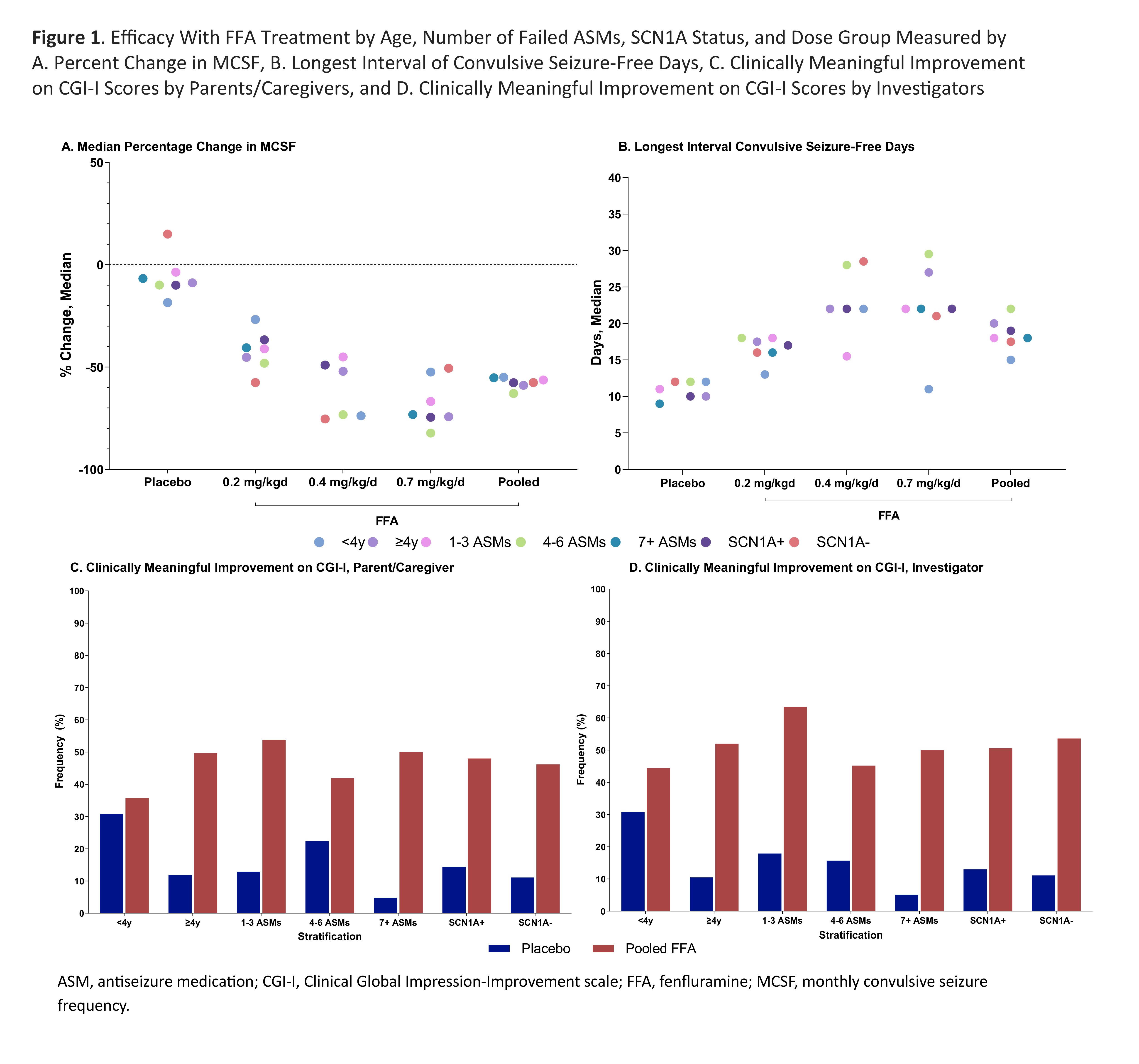
Methods: Patients with DS, 2-18 years of age, treated with placebo, 0.2 or 0.7 mg/kg/d FFA (0.2FFA, 0.7FFA) without stiripentol (STP), or 0.4 mg/kg/d FFA with STP (0.4FFA+STP) were included across the 3 pooled studies.1-3 Pooled data were stratified by age at FFA initiation (< 4y and ≥4y), severity (number of failed ASMs: 1-3, 4-6, and 7+), and SCN1A pathogenic variant status (+ or -). Demographics, baseline characteristics, and safety were reported. Median percentage change in monthly convulsive seizure frequency (MCSF), median longest interval of convulsive seizure-free days, and proportion of patients with clinically meaningful improvement (much or very much improved) on Clinical Global Impression—Improvement (CGI-I) scores (caregiver and investigator) were assessed.
Results: Across the RCTs, 348 patients were included; 216 were treated with FFA (0.2FFA, n=85; 0.4FFA+STP, n=43; 0.7FFA, n=88) and 132 with placebo. Most patients (83.7%-89.4% across groups) were ≥4y and the majority (70.6%-81.4%) was SCN1A+. Many patients failed 4-6 (31.8%-48.8%) or 7+ ASMs (34.8%-57.6%); however, no patients treated with 0.4FFA+STP failed 7+ ASMs.
TEAE rates were similar across groups (81.8% [placebo]–97.7% [0.4FFA+STP]; Table 1). Highest dose groups (0.4FFA+STP and 0.7FFA) experienced the greatest percentage MCSF reduction (Fig 1A) and increase in median convulsive seizure-free days (Fig 1B) relative to placebo. In patients treated with 0.4FFA+STP, MCSF reductions were highest in patients < 4y, with 4-6 failed ASMs, or who were SCN1A-. FFA treatment was associated with increased frequency in clinically meaningful improvement on CGI-I scores relative to placebo (Fig 1C and 1D). While CGI-I scores were consistent across stratified groups, patients who failed only 1-3 ASMs prior to the trial had greater frequency of clinically meaningful improvement on investigator CGI-I scores.
Conclusions: FFA is associated with improved seizure and non-seizure outcomes relative to placebo, regardless of age, severity, or SCN1A status. Results should be interpreted with caution due to sample size. Inferential analyses of stratified groups in larger populations may provide a better understanding of the increased benefits seen with different DS populations, synergies with concomitant medications, and FFA doses.
References
1. Lagae L, et al. Lancet. 2019;394(10216):2243-54.
2. Nabbout R, et al. JAMA Neurol. 2020;77(3):300-8.
3. Sullivan J, et al. Epilepsia. 2023;64(10):2653-66.
Funding: UCB Pharma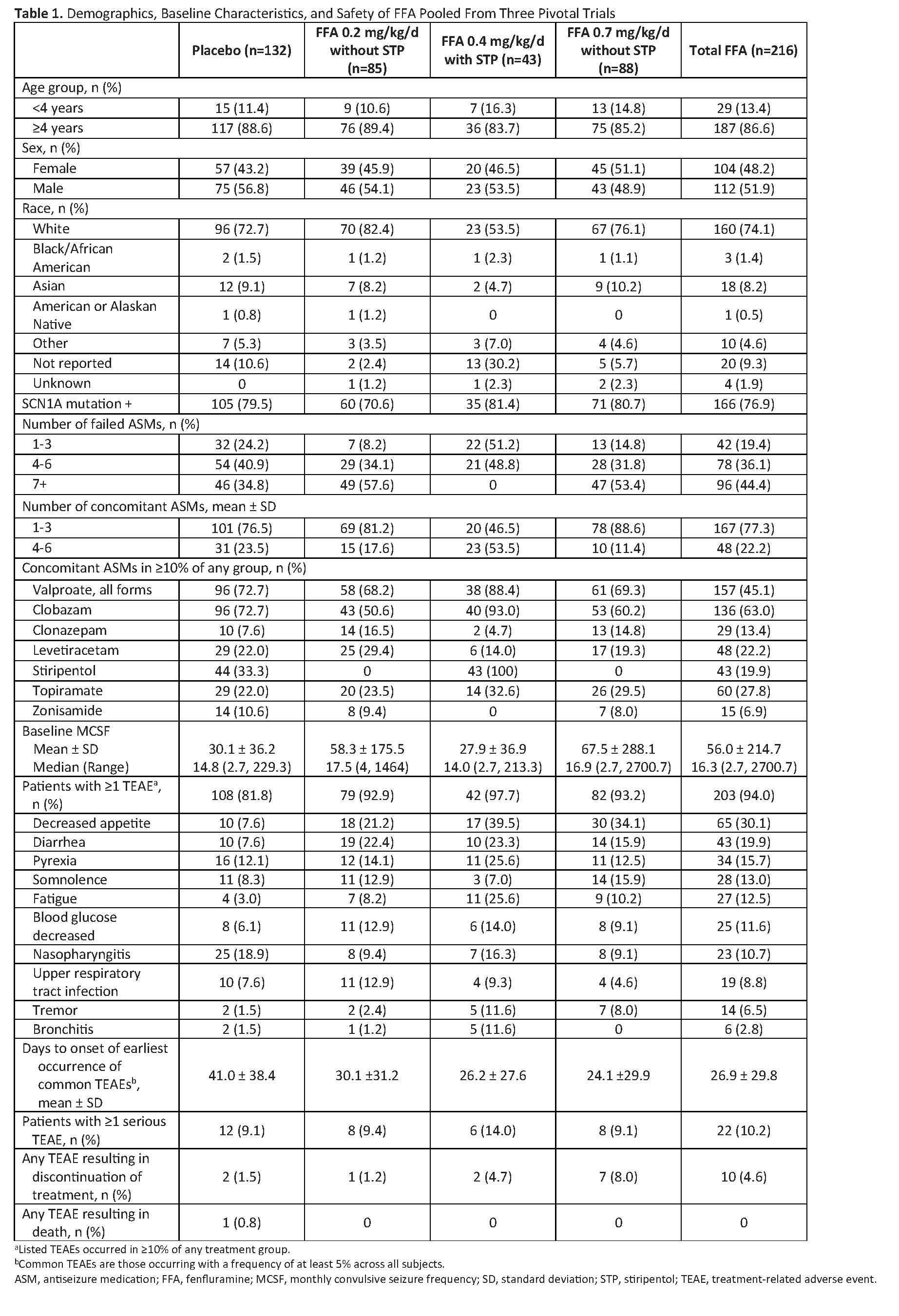
 Types
Types
Enter Note
Go to previous page in this tab
Session




.jpg)
.jpg)
.jpg)