-


- Antiseizure Medication Regimen Adjustment After Fenfluramine Initiation: Lessons Learned from European Early Access Program in Pediatric and Adult Patients with Dravet Syndrome
-
Generic 'disconnected' MessagePoster Number: 1.341
Rationale: Dravet syndrome (DS) is a rare developmental and epileptic encephalopathy characterized by seizure onset within the first year of life, high seizure frequency, and developmental, motor and behavior delays thereafter. Fenfluramine (FFA) is approved in the US, EU, UK, Israel, and Japan for the treatment of seizures associated with DS in patients (pts) ≥2 years old. Because DS persists into adulthood, there is a need for long-term FFA usage data in this population. Here, we report FFA dosage and concomitant ASM dose adjustments from a clinical practice setting in adult and pediatric (ped) pts who participated in the European early access program (EAP; supported by Zogenix/UCB).
Methods: The EAP was opened in 2018 until EMA approval in 2020, when patients transitioned at country reimbursement. Prior to EMA approval, pts were eligible through their physician if they had a confirmed DS diagnosis, no alternative treatment, and were ineligible to enroll in a clinical trial. Key contraindications for participation included hypersensitivity to FFA or any of its excipients, valvular heart disease, pulmonary artery hypertension, or treatment with a monoamine oxidase inhibitor within 14 days prior. The maximum FFA dose allowed in the EAP without concomitant stiripentol (STP) was 0.7 mg/kg/d (26 mg/d for pts ≥37.5 kg) and 0.4 mg/kg/d (17 mg/d for pts ≥37.5 kg) with concomitant STP.
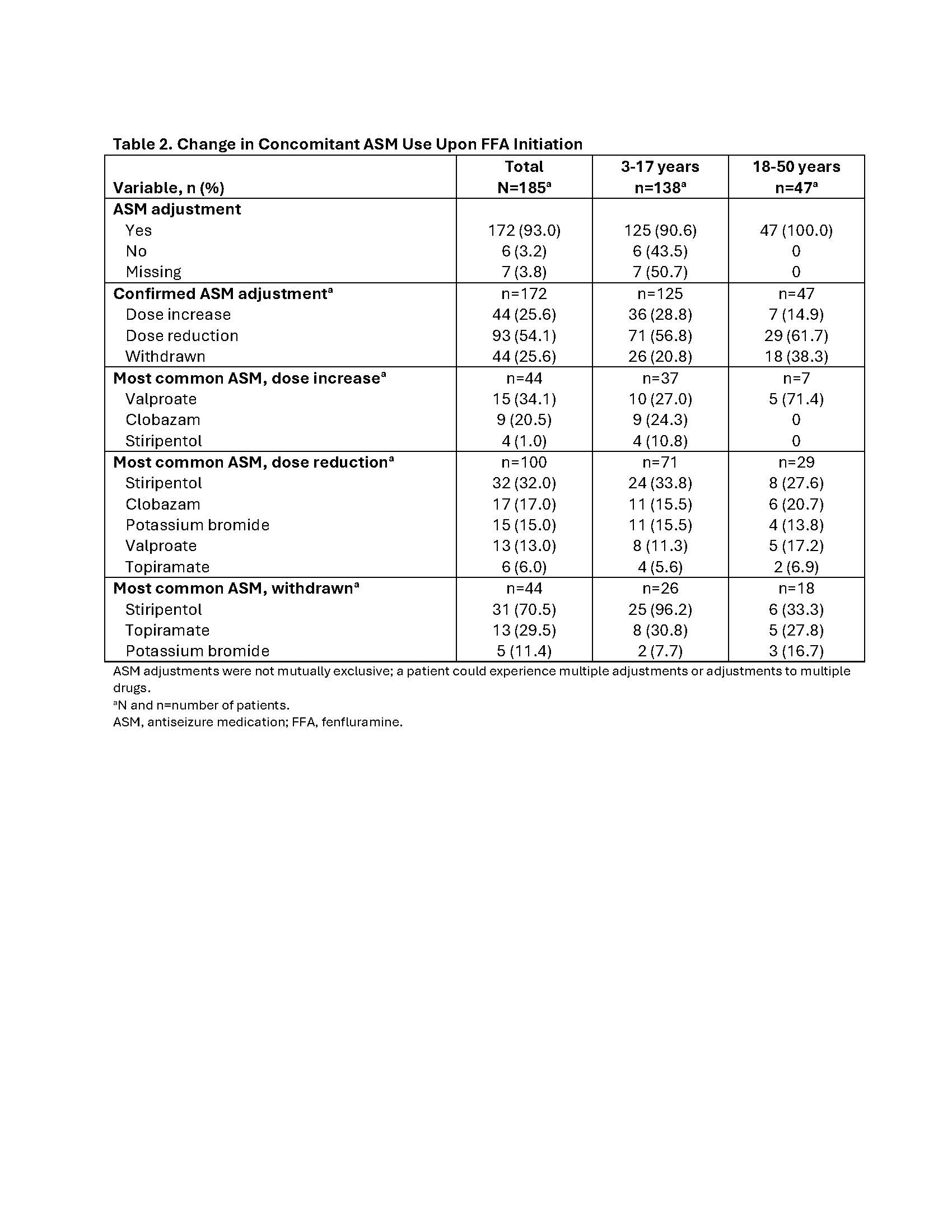
Results: Of 269 total pts (Germany, 43.9%; Italy, 39.0%; Spain, 10.8%; UK, 4.5%; Ireland, 1.9%), 192 (71.4%) were ped pts and 77 (28.6%) were adults (≥18 years old) at their last request. Overall, 41 (15.2%) pts withdrew from the EAP for various reasons, including FFA commercial availability in respective countries. Overall, 48.3% of pts were female (Table 1). Concomitant STP use at initial request was reported in 54.7% and 44.2% of ped and adult pts, respectively. Mean (SD) weight at initial request was 26.0 (12.6) kg and 68.5 (22.2) kg, respectively; 27.8 (13.5) kg and 66.8 (17.2) kg at noninitial (follow-up) requests, respectively. Mean (SD) FFA dosage at initial request was 9.63 (6.07) mg/d and 17.52 (5.99) mg/d, respectively; 12.33 (5.19) mg/d and 18.89 (5.15) mg/d for noninitial requests, respectively. 93% of pts had concomitant ASM adjustments after FFA initiation (Table 2). ASM dose reductions were observed in 56.8% and 61.7% of ped and adult pts, respectively; STP was the most common dose-reduced ASM (33.8% and 27.6%, respectively). ASM withdrawals were observed in 20.8% and 38.3% of ped and adult pts, respectively; STP was the most common ASM withdrawal (96.2% and 33.3%, respectively). ASM dose increases were observed in 28.8% and 14.9% of ped and adult pts, respectively; valproate was the most common dose-increased ASM (27.0% and 71.4%, respectively).
Conclusions: Pts with DS who enrolled in the EAP received FFA doses within the recommended maximum dose ranges for ped and adult pts. Concomitant ASM dose adjustments were observed in the vast majority of pts upon FFA initiation. In the largest adult population treated with FFA to date, we observed meaningful ASM dose reductions and withdrawals that reflect the effectiveness of FFA.
Funding: UCB Pharma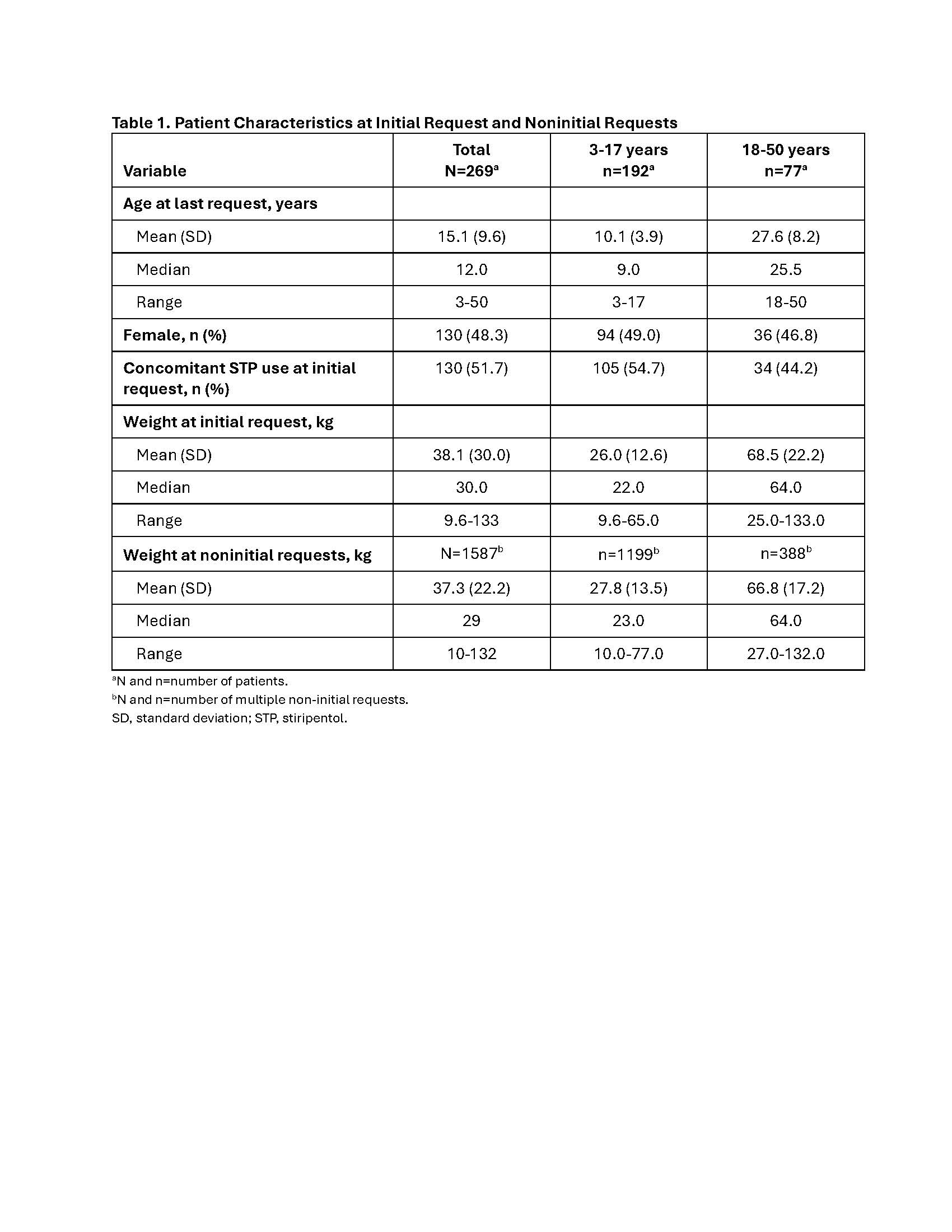
 Types
Types
Enter Note
Go to previous page in this tab
Session