-

- Retrospective Study on a Pediatric Status Epilepticus Pathway
-
Poster Number: 1.307
Rationale: Convulsive status epilepticus (CSE) requires rapid intervention to prevent associated morbidity and mortality. Fosphenytoin, levetiracetam and valproate were shown to be similarly effective for treatment of benzodiazepine-resistant status epilepticus in children.1 Protocol-driven care with rapid drug access at our institution decreased time to second-line therapy.2 This follow-up study examines the use of second-line antiseizure medications (ASMs), i.e. first non-benzodiazepine agent, in pediatric benzodiazepine-resistant CSE, using the need for a third ASM as an indicator of failure of the second ASM.
Methods: We retrospectively reviewed 500 patient charts at the Children’s Hospital at Montefiore (CHAM) from July 2016 to June 2024. Patients under 21 years old with ICD codes for “seizure,” “status epilepticus” were screened. Charts were reviewed to confirm CSE, benzodiazepine administration, second ASM selection, and need for additional agents. Exclusions included non-convulsive or neonatal seizures, and deviations from the established CHAM treatment pathway.2 Statistical analysis assessed whether the differences in additional ASM use following benzodiazepine administration were statistically significant.
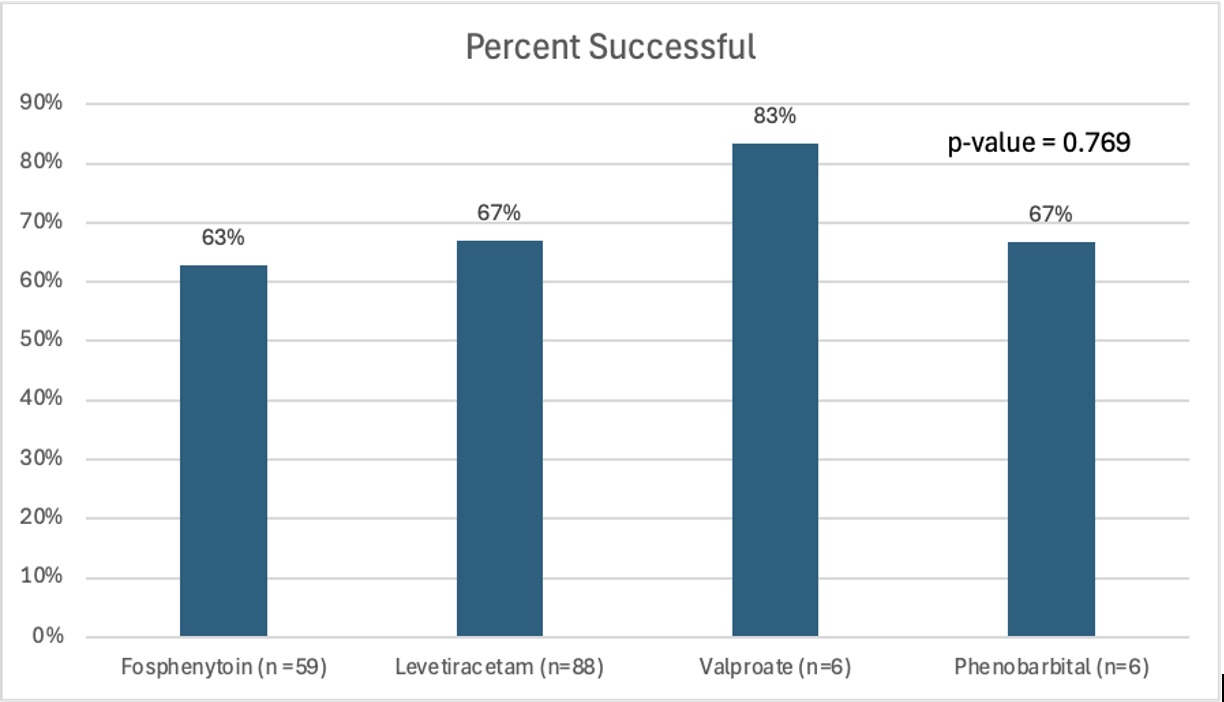
Results: A total of 158 encounters met inclusion criteria; 123 met strict criteria for CSE, (45% female, median age 5 years, range 7 months to 19 years). Etiologies included epilepsy with or without ASM underdosing/nonadherence (34.6%), acute intracranial pathology including intracranial infection (37.7%), febrile CSE (19.5%), chronic structural abnormalities (1.3%), and other/unknown causes (6.9%). Levetiracetam was the most commonly used initial ASM overall, particularly in cases of nonadherence and intracranial pathology. The choice of second ASM did not significantly differ by etiology (p = 0.551). Most encounters did not require a third ASM. Levetiracetam was effective in 67%, fosphenytoin in 62.7%, valproic acid in 83.3% (p = 0.769). Logistic regression accounting for sex, age and etiology similarly showed no statistically significant difference. Among patients treated with levetiracetam, 33% required a third ASM—most often fosphenytoin (19.3%, p < 0.05). Conversely, 37.3% of those receiving fosphenytoin needed a third ASM—most frequently levetiracetam (15.3%, p < 0.05).
Conclusions: Levetiracetam, fosphenytoin, and valproic acid demonstrated no statistically significant differences in efficacy for terminating benzodiazepine-resistant convulsive status epilepticus in our patient cohort.References:
1. Chamberlain, J.M., et al., Efficacy of levetiracetam, fosphenytoin, and valproate for established status epilepticus by age group (ESETT): a double-blind, responsive-adaptive, randomised controlled trial. Lancet, 2020. 395(10231): p. 1217-1224.
2. Cassel-Choudhury, G., et al., Protocol-Driven Management of Convulsive Status Epilepticus at a Tertiary Children's Hospital: A Quality Improvement Initiative. Pediatr Crit Care Med, 2019. 20(1): p. 47-53.
Funding: None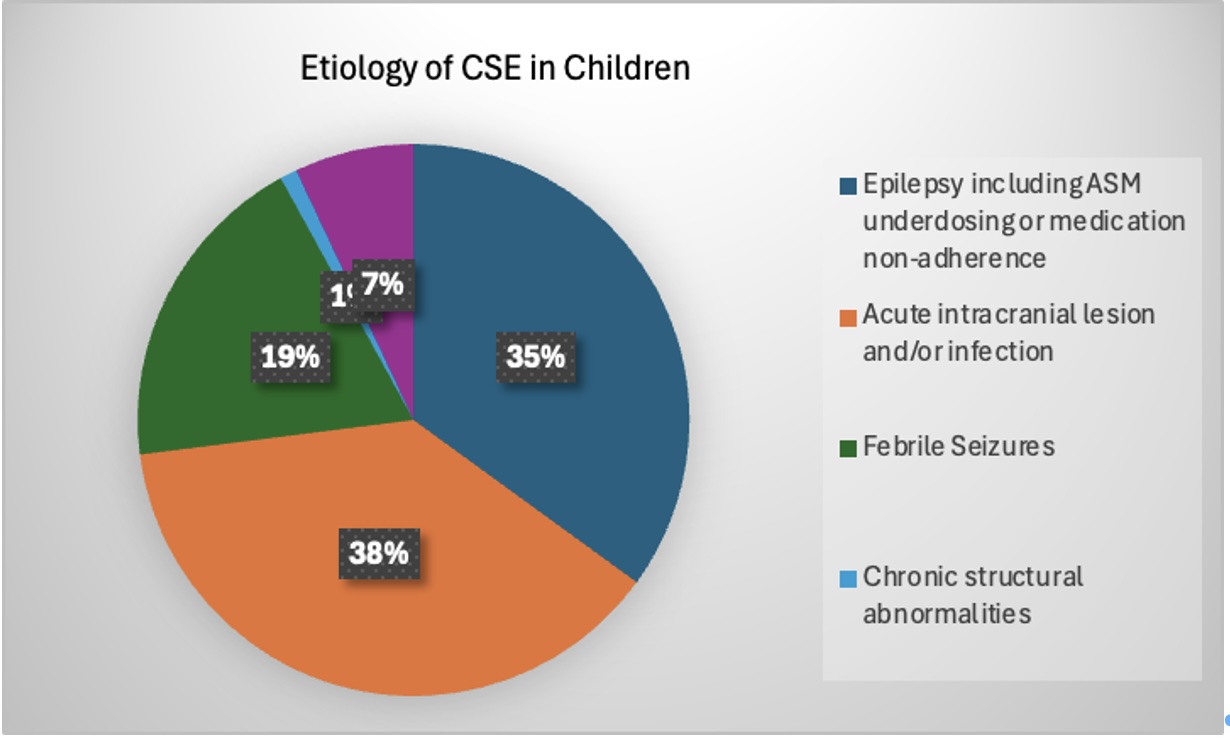
 Types
Enter Note
Go to previous page in this tab
Session