-

- Real World Utilization of Stiripentol (STP) by United States (US) Prescribers: A 3-Year Analysis Update
-
Poster Number: 2.452
Rationale: Dravet syndrome (DS) is characterized by drug-resistant seizures, requiring polytherapy and individualized dosing for adequate seizure control. Despite rational polytherapy recommendations and availability of DS-approved antiseizure medications (ASMs), stiripentol (STP), cannabidiol (CBD), and fenfluramine (FFA), integration into treatment regimens remains limited1. To expand upon our previous real-world analysis2, this review was extended through 2025 to evaluate STP dosing patterns, age-based variations, and concomitant ASMs, further characterizing US prescribing practices.
Methods: A retrospective analysis was performed using data of new US patients (pts) prescribed STP from August 2022–April 2025. Data collected included age, weight, diagnosis code, STP dosage, months on therapy, and concomitant ASMs at initiation. Prescribing patterns were evaluated for frequency of DS-specific ASM use, prevalence of polytherapy, and dosing trends of STP dependent on age/months on therapy. Data were compared with previous analyses to identify evolving trends2.
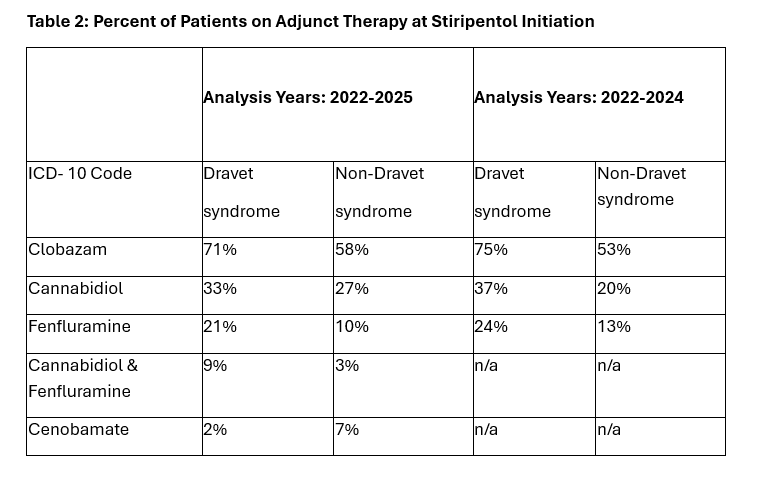
Results: Data were analyzed for pts < 1–70 years who received at least 1 dispensed dose of STP between August 2022–April 2025. The average STP dose among DS patients was 37.87 mg/kg/day and 31.54 mg/kg/day among non-DS patients (previously 38.16 mg/kg/day and 29.24mg/kg/day). At STP initiation, 71% were taking clobazam (CLB), 33% CBD, and 21% on FFA (previously 75%, 37%, 24%). Only 9% were on CBD and FFA. Levetiracetam (16%) and valproic acid (15%) were the most common non-DS approved ASMs. Discontinuation (D/C) rates were similar between DS (33%) and non-DS (34%) groups, with lower D/C rates observed in patients managed at Level IV NAECs or Comprehensive Care Centers (32% DS; 26% non-DS).
Conclusions: This 3-year analysis shows STP dosing remained consistent and below the FDA-approved dose of 50 mg/kg/day, with higher doses in younger patients. Doses of STP increased with longer treatment duration, reflecting titration to maintenance dosing, which is critical for tolerability and reduced premature discontinuations. While maintenance doses in younger patients were consistent with approved dosing, patients ≥ 6 years received lower average STP doses even after 8+ months on therapy. Despite polytherapy use in DS, most patients were not prescribed STP in combination with other DS-approved therapies. While sodium channel blockers were rarely prescribed, use of non–DS-specific ASMs remained common. D/C rates were stable across groups with potential benefit observed by NAEC management. These findings highlight opportunities to optimize STP dosing, address underutilization of DS-approved ASMs, and close gaps in concomitant management.
Funding: Biocodex, Inc..png)
 Types
Types
Enter Note
Go to previous page in this tab
Session